3D-PASS: A Score Based on 3D Anatomy to Describe Kneecap Instability Severity

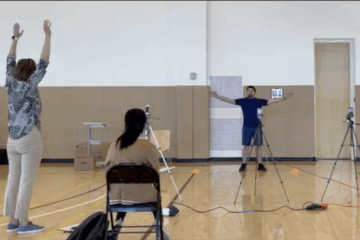
Current clinical scores for predicting patellar instability treatment outcomes rely on 2D imaging measurements that do not fully describe 3D anatomy. Marissa Sinopoli and a team of Mobilize Center researchers at Stanford University developed a novel 3D medical imaging-based anatomical score for patellar instability. The team analyzed magnetic resonance images from 270 Read more

By admin, ago

Webinar: A Hands-on Guide to the NMSM Pipeline for Treatment Design

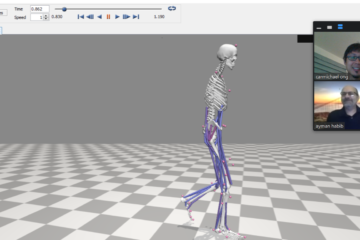
Details This event has passed. View the recorded talk and additional resources below. Abstract Designing optimal orthopedic surgery, physical rehabilitation, and neurorehabilitation interventions using “digital twins” of individual patients is an important goal of neuromusculoskeletal modeling. The open-source Matlab-based Neuromusculoskeletal Modeling (NMSM) Pipeline software was developed specifically to achieve this goal by Read more

By admin, ago

OpenSim+ Advanced User Workshop at Stanford University

We are now accepting applications for a three-day, project-based OpenSim+ workshop on the Stanford University campus. This workshop will take place March 24-26, 2026 and is intended for researchers who are advanced users of our software tools, models, and datasets, including OpenSim, OpenSim Moco, OpenSense, OpenCap, and AddBiomechanics. Advanced users Read more

By admin, ago

Study reveals gait retraining could help treat knee osteoarthritis

Knee osteoarthritis is a degenerative joint condition often treated with surgery or medication. A new, year-long randomized controlled trial investigated whether a non-invasive, non-pharmacological approach could decrease pain and slow the cartilage damage typically observed in osteoarthritis. In the trial, Scott Uhlrich and other researchers from the NIH-funded Mobilize Center Read more

By admin, ago